
On a golf morning, the first ten minutes out of bed used to decide my whole round. I would sit up, swing my legs over the edge, and stand there for a minute, waiting for the tightness in my lower back to tell me how the day was going to go. Most days it promised a slow, stiff walk to the first tee and a long ride home. I am 61, I have had a bulging disc in my lower back since I was 52, and for years I just assumed a bad morning meant a bad round. Then I changed one small thing in my routine. The Magic Back Support stretcher is a big reason I still walk 18 holes two or three times a week at my municipal course.
My doctor gave me the plan after the scan showed the bulging disc. Keep moving, he said. Keep the muscles around the disc strong and accept that some mornings would be tough. I tried to follow it. I stretched on the floor before breakfast. I did the exercises the physical therapist handed me on a printed sheet. I even owned a foam roller, the kind everyone on the course swears by. All of it helped a little. None of it touched the thing I complained about most: the tight, achy band across my lower back that was always worst in the first hour of the day.
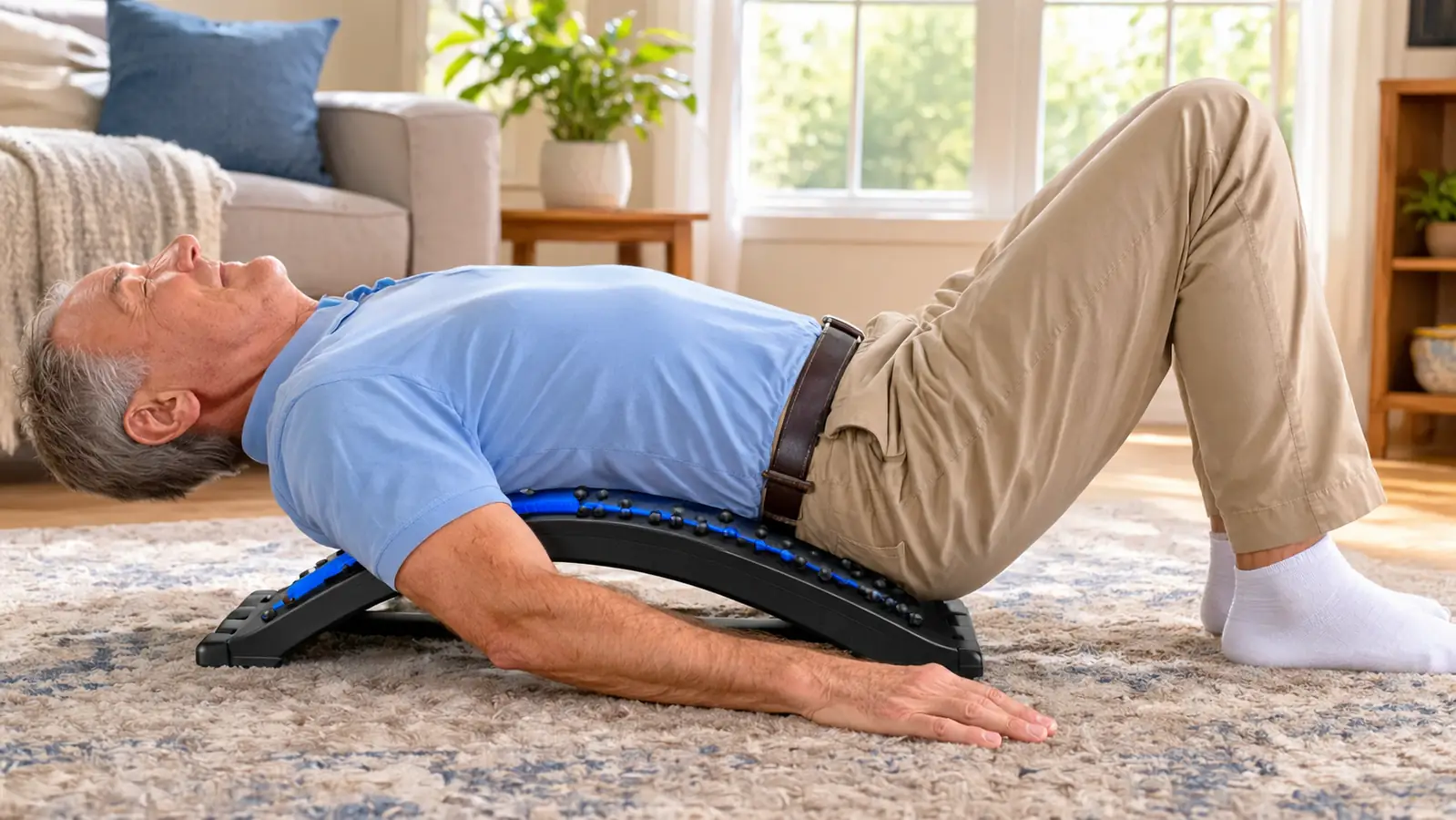
Then one of the guys I play with on Thursdays mentioned offhand that he had started using a back stretcher in the mornings and that his back had stopped being the main topic on the first tee. That was enough for me. The Magic Back Support stretcher arrived, and I put it to work the same day. You lie on it, settle it under your lower back, and let your own weight do the work. It is not a violent crack like a chiropractor's table. It is a slow, steady stretch that lets the muscles along your lower spine ease up. It is not a cure, and it is not a replacement for your own doctor's advice. It is a simple tool, and it made the first hour of my day a lot easier to live with.
The way I use it is boring, and boring is exactly what I wanted. I keep it on the living room floor next to the chair where I drink my coffee. Four or five minutes on it before breakfast, most mornings, and always on a day I am going to play. By the time I have pulled on my walking shoes and loaded the clubs into the pickup, my lower back feels like it has already been woken up, and that changes how I walk off the first tee.
Four or five minutes on the stretcher before coffee, and I feel the difference by the third hole. The morning after a round is easier, too.
If a stiff lower back is making you wonder whether you can keep playing, this is the stretcher that got me back to the first tee.
I am not a doctor, and I am not going to promise you anything. I can only tell you what it did for me: a gentler start to the morning and a more comfortable round. It is the tool I reach for before every round now.
Amazon Check Today's Price on Amazon →Here is the honest part, and I want to be direct about it. I am not a doctor or a physical therapist, and I am not going to tell you what to do with your back. If your pain is sharp, if it runs down your leg, or if it is getting worse, skip the online order and make an appointment instead. That is what I would tell my own brother, and it is what I tell anyone who asks about the stretcher. What I can share is my own experience, nothing more.

Once I got through the first week, the change showed up in small ways I could point to. I bend over a three-foot putt without bracing myself first. I can twist to reach my ball in the cup on the 18th green instead of asking one of the guys to grab it. The ride home in my pickup used to be the worst part of the day, with my back tightening up after an hour of sitting. Now it is just a ride.
The morning after a round, the difference is the thing I notice most. Before, the day after golf meant moving slowly and warning Linda not to expect much from me before noon. Now I do my four or five minutes first thing, and the day starts normally. I am not claiming the Magic Back Support stretcher took my back pain away, because I still have stiff mornings. What it did was take the edge off the worst part of the day, and that let me keep doing the thing I love.
What I'd Tell You If We Were Sitting at My Kitchen Table
If we were sitting at my kitchen table, Linda would probably be rinsing coffee cups while we talked, and I would tell you this plainly. A back stretcher is not going to fix a damaged disc or replace the work your doctor gave you. What it can do is buy you a more comfortable start to the day, and for a golfer that matters more than it sounds like it should. I would tell you to try one, use it in the morning when your back is stiffest, and give it a couple of weeks before you make up your mind. And I would tell you to keep walking your course if you can, because the walking does as much for my back as any tool I own. The Magic Back Support stretcher just makes it possible to keep doing it. If your back is the thing standing between you and the first tee, that is a problem worth working on. This is the tool that helped me keep working on mine.
I still keep mine on the living room floor, next to the coffee chair, and I rarely miss a morning.
A back that starts the day easier makes the whole round easier. If that is what you are after, the Magic Back Support stretcher is worth a look. As always, talk to your own doctor about what is right for your back.
Amazon Check Today's Price on Amazon →