
The first time I wore a MUELLER lumbar brace on the golf course, I was 20 minutes into the back nine and waiting on the 14th tee. I had driven 45 minutes to the course, the seat in my old pickup truck does me no favors, and by the turn my lower back felt like a board that had been left out in the sun. I pulled the brace out of my bag, stood behind the cart, and put it on over my shirt. I finished the round, and the next morning I was not walking like a man who had just played 18 holes.
I am Warren Oakes, 61, a retired land surveyor in Albuquerque. I have played golf two or three times a week for years, and I have dealt with lower back stiffness for about a decade. A doctor told me at 52 that I had a bulging disc in my lower back, and his advice was simple: stay active, keep your core strong, and find ways to keep playing. This review is about what the MUELLER lumbar brace did for me over months of use, where it helped, where it did not, and who I think should try it. I am not a doctor or a physical therapist, so take all of this as one golfer's experience, and talk to your own doctor or PT about pain that is sharp, radiating, or getting worse.
The Quick Verdict
The MUELLER lumbar brace is the first thing I reach for on days when my back is stiff and I still want to play. It does not fix anything, but it takes the edge off the worst part of the golf swing and helps me walk off the 18th green feeling like myself.
Amazon Check Today's Price →Keep Your Round Going When Your Back Is Stiff
The MUELLER lumbar brace gives your lower back firm, adjustable support right where the golf swing needs it most. See today's price on Amazon and decide if it belongs in your bag.
Amazon Check Today's Price on Amazon →How I've Used It
I have worn the MUELLER lumbar brace on more than 30 rounds over the last several months, plus a handful of range sessions and a few long days of yard work. Most of the time I put it on at the car, right after I park and before I walk to the clubhouse. It takes about a minute to get it positioned and snug. I wear it over a thin base layer or directly against my skin under a loose golf shirt, depending on the temperature.
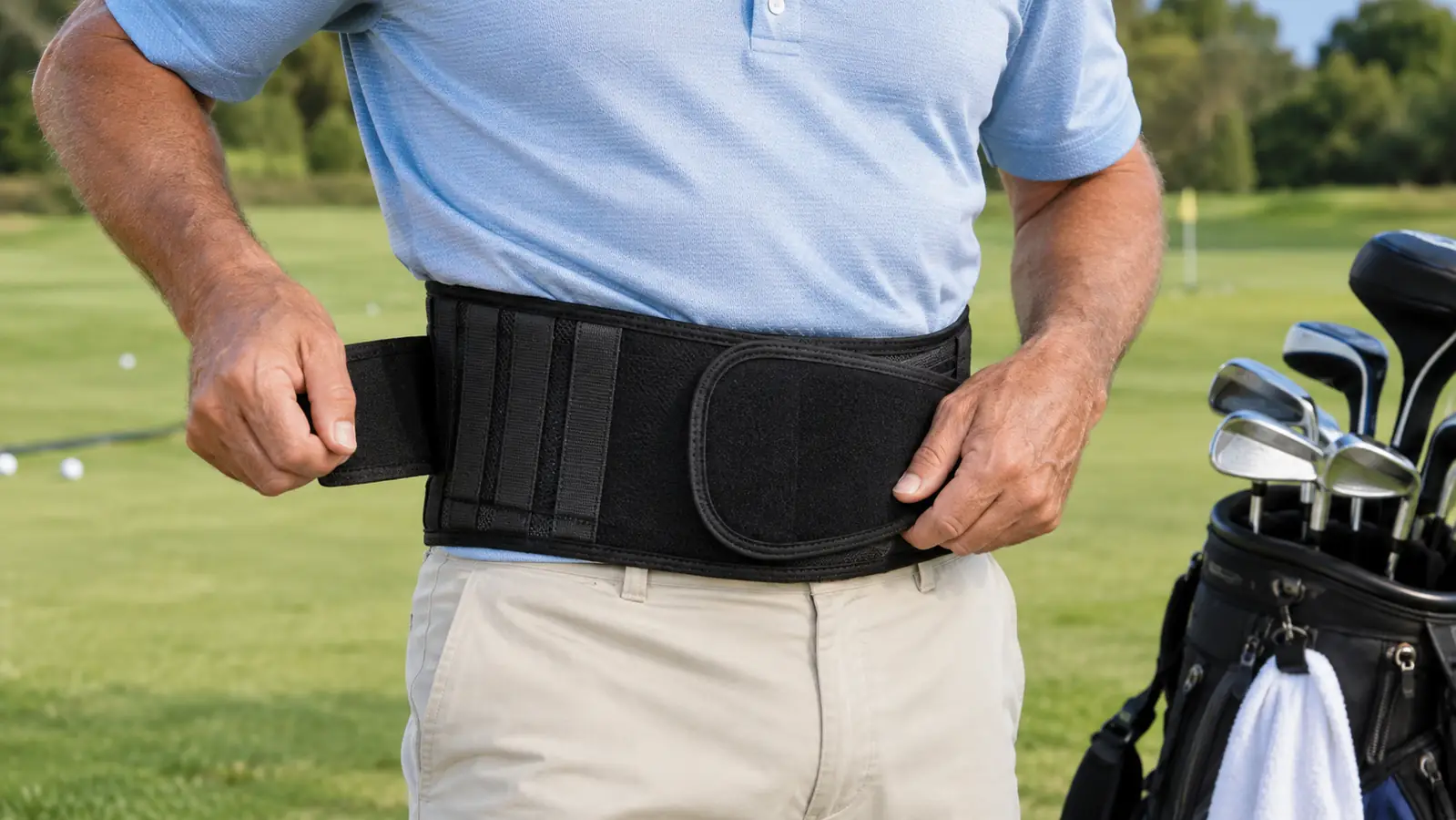
The brace has two straps that pull from the sides and meet in the front, and a removable pad that sits over the lower back. I adjust it standing up, pull the straps until it feels firm but not tight enough to interfere with my breathing, and then I forget about it. On the course I have never had to stop and re-tighten it mid-round. It stays where I put it through a full swing, a cart ride, and a walk up a steep fairway.
I have also used it on the morning after a round, when my back is at its stiffest. Wearing it for an hour or two while I move around the house, do a few errands, or stretch seems to help me get going without that first-hour shuffle. I want to be clear about what it is not: it is not a treatment, and it does not make the underlying stiffness go away. It is support that makes the day more manageable.
One round in late September is the one I keep coming back to when I try to explain what this brace actually does. The temperatures had finally dropped below 85, so I decided to walk the full 18 with my push cart instead of riding, which is something I do maybe one round in three. I put the brace on in the parking lot at 7:40 that morning, right after I parked my pickup and pulled my bag out of the bed. I did not take it off until I was back at the truck a little after noon. My back was tired when I got home, but it was the honest tired you feel after a day on your feet, not the guarded, careful stiffness I get when I have pushed too hard. That round is the one that turned the brace from something I was testing into something I just do. Now it goes on at the car without me thinking about it.
What the Brace Actually Does for a Golf Swing
The golf swing is a terrible movement for a stiff lower back. You start in a static position, rotate hard, and then stop suddenly. That rotation loads the lumbar spine in a way that is completely different from walking or standing. What the MUELLER brace does is give the lower back a firm external layer that resists that twisting motion. It does not stop the rotation, but it slows it down and gives the muscles something to work against.
For me, the difference shows up most on the first few holes. Without the brace, my first tee shot of the day is a gamble. Sometimes it feels fine, and sometimes the rotation sends a sharp reminder through my lower back that I am 61 years old. With the brace on, that first swing feels protected. I still warm up, I still take easy swings, but I am not bracing myself for the moment of impact.
The removable pad is the part I was most skeptical about, and it turned out to be the part I notice most. It sits right over the lumbar area and provides a firm, focused pressure that feels like a thumb pressing into the right spot. I have used the brace with the pad and without it, and I always put the pad back in. The pad is held in place by a pocket, so it does not slide around during a round.
The clearest way I can show you the difference is the 6th hole at my course. It is a short par 4, maybe 315 yards, with a fairway that tilts left to right and a bunker guarding the left side of the green. It is a hole that rewards a full, free swing. I played it twice in the same week last summer, once without the brace and once with it. Without the brace, I took the club back slow and short, worried about the rotation at the top of the swing, and watched a weak fade leak into the right rough. With the brace on, I made the same swing I have been making for fifty years, and the ball sat in the middle of the fairway with a clean look at the green. That is the whole argument for this thing in one hole. It did not make me longer, and it did not fix my back. It let me swing the way I already know how to swing.
How It Holds Up Over Months of Use
I have put this brace through a full season of use, and it has held up better than I expected. The straps still grip firmly, the velcro has not worn out, and the pad has kept its shape after being washed several times. I wash it by hand with mild soap and hang it to dry, and it comes out looking almost new. The fabric breathes well enough that I have worn it on 90-degree days without feeling like I was wrapped in a wet towel.
The rain test came in late October. I got caught in a short shower on the back nine, and by the time I finished the round the brace was damp and had picked up a smell that was mostly sweat. That evening I soaked it in cool water with a little mild detergent, rinsed it well, and laid it flat on a towel to dry overnight. By the next morning it was dry, the straps still held their grip, and the pad had not shifted in its pocket. I have washed it that way five or six times since, and nothing has come loose, no strap has frayed, and the velcro still grabs the way it did on day one. The only rule is no dryer. The heat would wreck the velcro in a single cycle. Hand wash it, lay it flat, and it will outlast the season.
One thing I have learned is that the brace works best when I put it on before my back starts complaining. If I wait until I am already stiff and sore, it still helps, but the round is already half over and I have spent the front nine protecting my swing instead of playing it. Now I put it on at the car as part of my routine, the same way I check my glove and my ball marker before I walk to the first tee.
The fit has been consistent for me. I am about 5-foot-10 and 190 pounds, and the one-size-fits-most sizing works. The straps have enough range that I can get a firm fit over a thin shirt or a slightly thicker one. My wife Linda tried it once for a day of gardening and said it felt supportive, though she found the fit a little large for her frame. That is worth knowing if you are buying for a smaller person.

Where It Falls Short
The MUELLER lumbar brace is not a cure, and it is not a substitute for the things that actually improve a stiff back over time. I still do my core work, I still stretch, and I still try to walk more than I ride. The brace is the thing that lets me do those things on days when my back would otherwise talk me out of playing.
It also does not help with pain that is sharp, radiating down the leg, or getting worse. I have had days when the brace was not enough, and on those days I did the right thing: I skipped the round, or I played nine and walked the rest. If you are dealing with sciatica or a flare-up that is worse than your normal stiffness, do not use a brace as a way to push through it. That is a conversation for your doctor or PT.
There is one day I want to be honest about, because it shows the brace's limits better than anything else I could say. In November, a friend asked me to help him move a heavy workbench out of his garage, and I did not think to put the brace on before we started. By mid-morning my back was in a bad way, the sharp kind of ache that makes you breathe carefully and pick your steps. I put the brace on anyway, and it gave me enough support to finish loading the workbench into his truck, but it did not undo what the morning had already done. I moved slowly for the next two days and missed a round on Thursday. The lesson stuck with me: the brace works best ahead of the load, not as a rescue after I have already gone too far.
The brace is also visible under a fitted golf shirt. I wear mostly loose shirts, so it is not a problem for me, but if you like a slim fit, you will see the outline of the straps. It is a tradeoff I am happy to make, but it is worth knowing before you buy.
What I Liked
- Firm, adjustable support that takes the edge off the golf swing's rotation
- Removable pad puts focused pressure right on the lumbar area
- Stays in place through a full round, no mid-round re-tightening
- Holds up well after months of use and repeated washing
- Breathable enough for warm-weather rounds
- Easy to put on and take off, even in a parking lot
Where It Falls Short
- Not a treatment for the underlying cause of back stiffness
- Visible under fitted golf shirts
- One-size-fits-most may run large for smaller frames
- Does not help with sharp or radiating pain, and should not be used to push through a flare-up
The brace did not fix my back. It did something better: it let me keep playing golf on the days my back wanted me to stay home.
Who This Is For
This brace is for the golfer who has a stiff lower back but has been told by a doctor or PT that staying active is the right plan. It is for the person who loves the game enough to drive 45 minutes to the course, walk 18 holes with a push cart, and then wake up the next morning and do it again. It is for the player who wants support during the round, not a lecture about resting.
It is also for the person who is not a golfer. I have used mine for yard work, for long car rides, and for days when I am on my feet for hours. The support is the same no matter what you are doing. If you have a stiff lower back and an active life, the MUELLER lumbar brace is a practical tool to have on hand.
Who Should Skip It
Skip it if your back pain is sharp, radiating down your leg, or getting worse. A brace is not the answer for a serious problem, and wearing one to push through pain can make things worse. Talk to a doctor or physical therapist first.
Skip it if you are looking for a fix. The MUELLER lumbar brace is support, not a treatment. It will not strengthen your core, improve your mobility, or make the underlying cause of your stiffness go away. If you want those things, the work is stretching, strengthening, and talking to a professional. The brace is the thing that helps you keep living your life while you do that work.
The Brace That Stays in My Golf Bag
After months of use, the MUELLER lumbar brace is the first thing I pack for a round. Check today's price on Amazon and see if it earns a spot in your bag too.
Amazon Check Today's Price on Amazon →