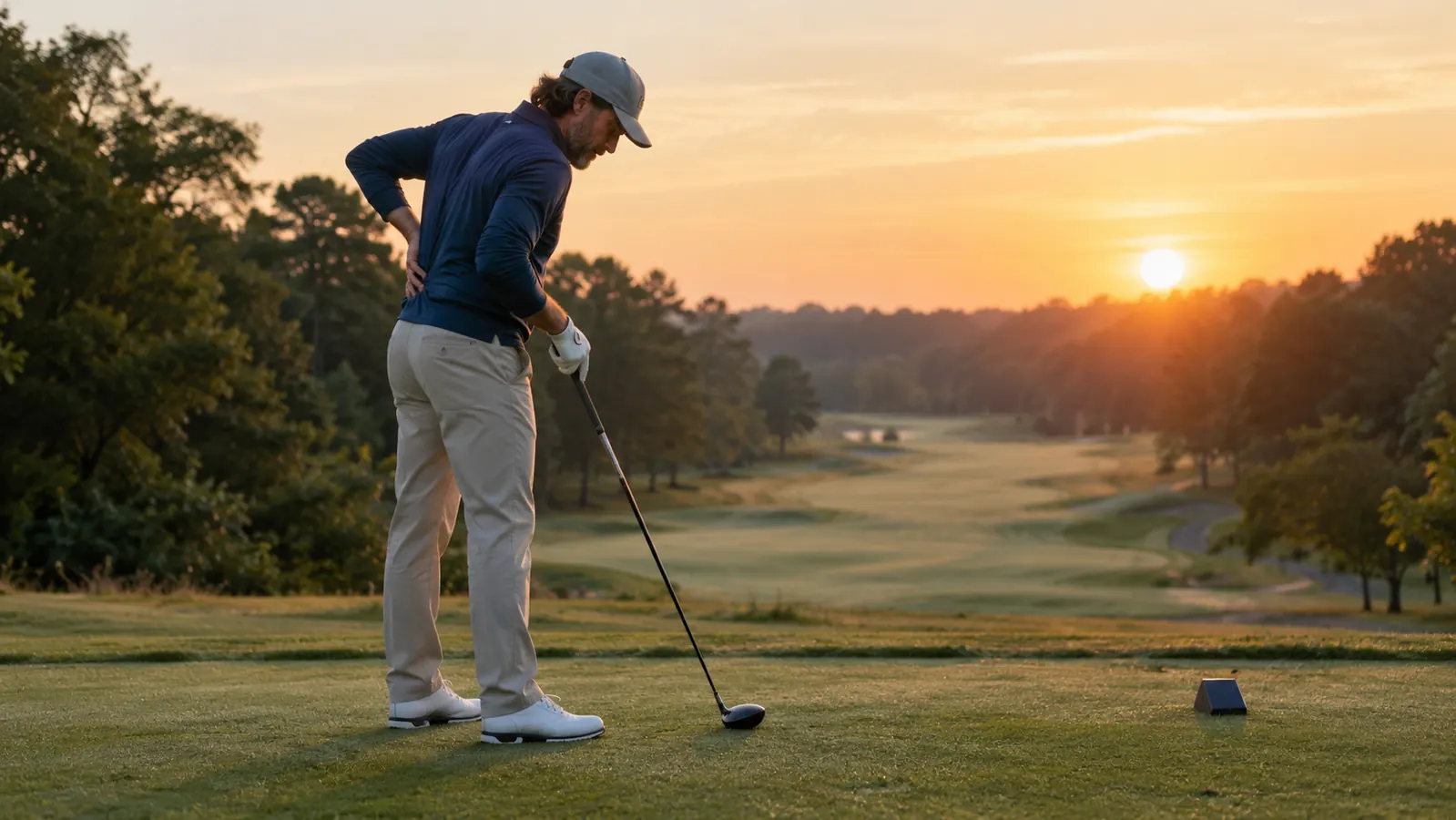
I am sixty-one years old, a retired land surveyor, and I carry a fourteen handicap. For the last decade I have played most of my golf on a municipal course here in Albuquerque, and I walk with a push cart when I can. My lower back has been stiff for about ten years. A doctor told me at fifty-two that I had a bulging disc and that the best plan was to keep moving and keep playing. So I kept playing.
The trouble was everything around the round. A long drive to the course in my old pickup truck would leave me tight before I ever reached the first tee. The first few holes would be stiff and short. And the morning after eighteen holes, I paid for it every time I leaned over to pull on my socks or tie my shoes. I tried the usual things. More stretching, less twisting on the backswing, a week off when it got bad. Some of it helped. None of it got me through a round the way I wanted. Then a playing partner mentioned the MUELLER lumbar brace, the one with the removable pad, and I ordered one out of pure stubbornness. I was not ready to give up the game.
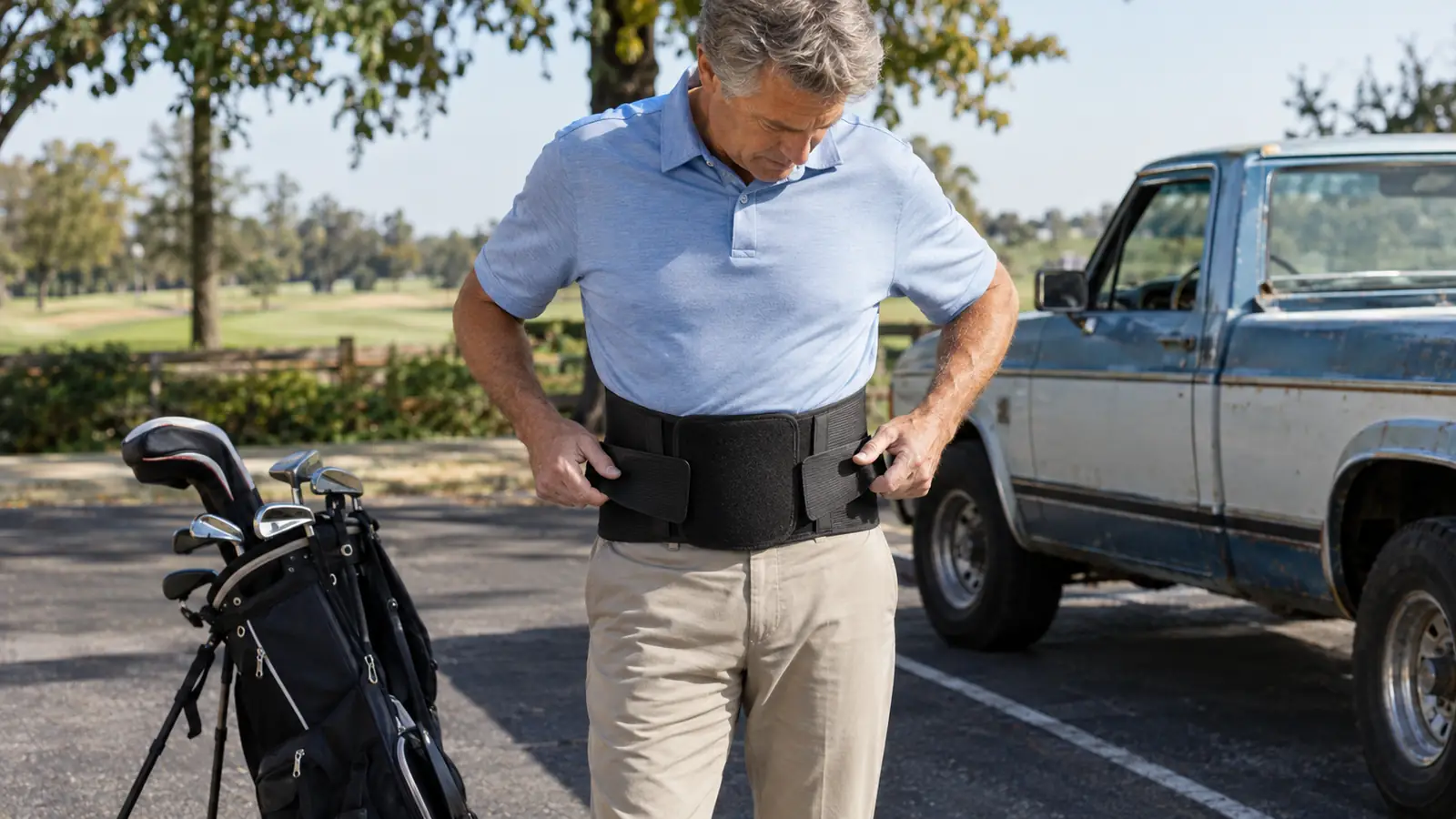
What I like about it is that it does not try to do too much. It wraps around your lower back and holds a firm pad against the small of the back, and the compression reminds you to stand up straighter. It is not a cast and it is not a machine. It is a tool. The removable pad is what sold me. It sits exactly where I need it, against the lower lumbar area, and it takes some of the load off muscles that have been doing overtime for a decade.
Here is how I use it. I buckle it on before the drive to the course, which used to be the moment my back started complaining. I wear it through all eighteen holes, under my shirt, and I loosen it between nines in the clubhouse. I do not think about it when I am swinging, which is exactly what I want. The brace is not the loudest thing in the round. That is the point.
The honest part. This brace does not fix a bulging disc, and I would not want you to think it will. Nothing I have found does. What it did for me was simpler and still worth a lot. It changed how I moved through a round, and it changed the morning after. When your back is not the first thing you think about on the drive home, you get to enjoy the round longer. For a recreational golfer who just wants to keep playing, that is the whole ballgame.
I played eighteen holes, walked the back nine with my push cart, and still leaned over to pick up my ball marker without groaning.
Keep the round, keep the morning after
If your back is the reason you are hesitating before booking a tee time, this is the brace I reached for every week this season. It is the reason I am still walking 18.
Amazon Check Today's Price on Amazon →The round that convinced me happened about a month in. I played eighteen holes on a Saturday, walked the back nine with my push cart, and still leaned over to pick up my ball marker on the last green without groaning. On the drive home I realized I had not once thought about my back. The next morning I got out of bed normally, no rolling onto my side first. That was the moment I stopped treating the brace as a maybe and started treating it as part of my bag.

I want to be straight with you about what this brace is and is not. It is a support. It is not a treatment, and I am not a doctor or a physical therapist, so I will not tell you it will do for your back what it did for mine. What I can tell you is that I still do my morning stretches, I still keep my backswing shorter than I used to, and I still walk whenever the course allows it. The MUELLER brace did not replace any of that. It made all of it easier to keep doing.
A few practical notes. I wear it over a thin t-shirt and under my regular shirt. It hand washes and dries fast, which matters in an Albuquerque summer. The pad is removable, so you can position the support where your back actually needs it. I have moved mine about half an inch over the months as I figured out where it does the most good. It has held up through two seasons of weekly rounds, and the straps still hold snug without slipping.
Linda noticed before I said a word. She asked one morning whether I had stopped groaning when I got out of the truck. I had not thought about it until she said it. The brace was doing its quiet job and my back had stopped being the first thing in my day. That is about the highest praise I can give a piece of equipment. You do not notice it when it is working. You just notice that you played.
One more thing, and it is the most important thing I will say here. There is a difference between stiffness and pain. The stiffness I have lived with for ten years is achy and dull and it loosens up as I move. That is what the brace helped. If your pain is sharp, or it runs down your leg, or it is getting worse instead of better, that is a conversation for a doctor, not a brace. I check in with my own doctor, and you should do the same with yours. Use this thing for what it is good at, and do not use it as a reason to ignore a back that is telling you something.
What I'd Tell You If We Were Sitting at My Kitchen Table
I would tell you to talk to your own doctor or physical therapist before you buy anything, because backs are personal and what helped mine might do nothing for yours. I would tell you that a lumbar brace is a tool, not a cure, and it earns its place in your golf bag if it lets you keep doing the things that keep you healthy. And I would tell you that I have kept my tee times, walked more holes than I did last season, and stopped dreading the morning after a round. The MUELLER brace is a big part of why.
Still deciding? That is fair.
This is the brace I reach for every week, and it is the reason I am still booking tee times. See today's price and decide for yourself whether it belongs in your bag.
Amazon Check Today's Price on Amazon →