I bought the TENS 7000 Unit for one reason: I wanted to keep playing 18 holes without spending the next morning on the couch. I am 61, I carry a 14 handicap, and I have had lower back stiffness for about ten years. A doctor told me at 52 that I had a bulging disc and that staying active was the plan. So I walk a municipal course with a push cart two or three times a week, and my back lets me know about it.
What nobody tells you about the TENS 7000 Unit is that it is not a cure and it is not a massage. It is a tool that interrupts the pain signal long enough for you to move better, and that is a different thing entirely. I have used mine for six months, through a New Mexico winter and into spring, and here is the honest version of what it does and what it does not do.
The Quick Verdict
The TENS 7000 Unit is the most practical pain-management tool I own for golf-related back stiffness, as long as you understand it is a temporary aid, not a fix.
Amazon Check Today's Price →Keep your back in the round, not on the couch
The TENS 7000 Unit is the unit I reach for before and after a round. It is not a cure, but it helps me get through 18 holes and sleep better that night.
Amazon Check Today's Price on Amazon →How I've Used It
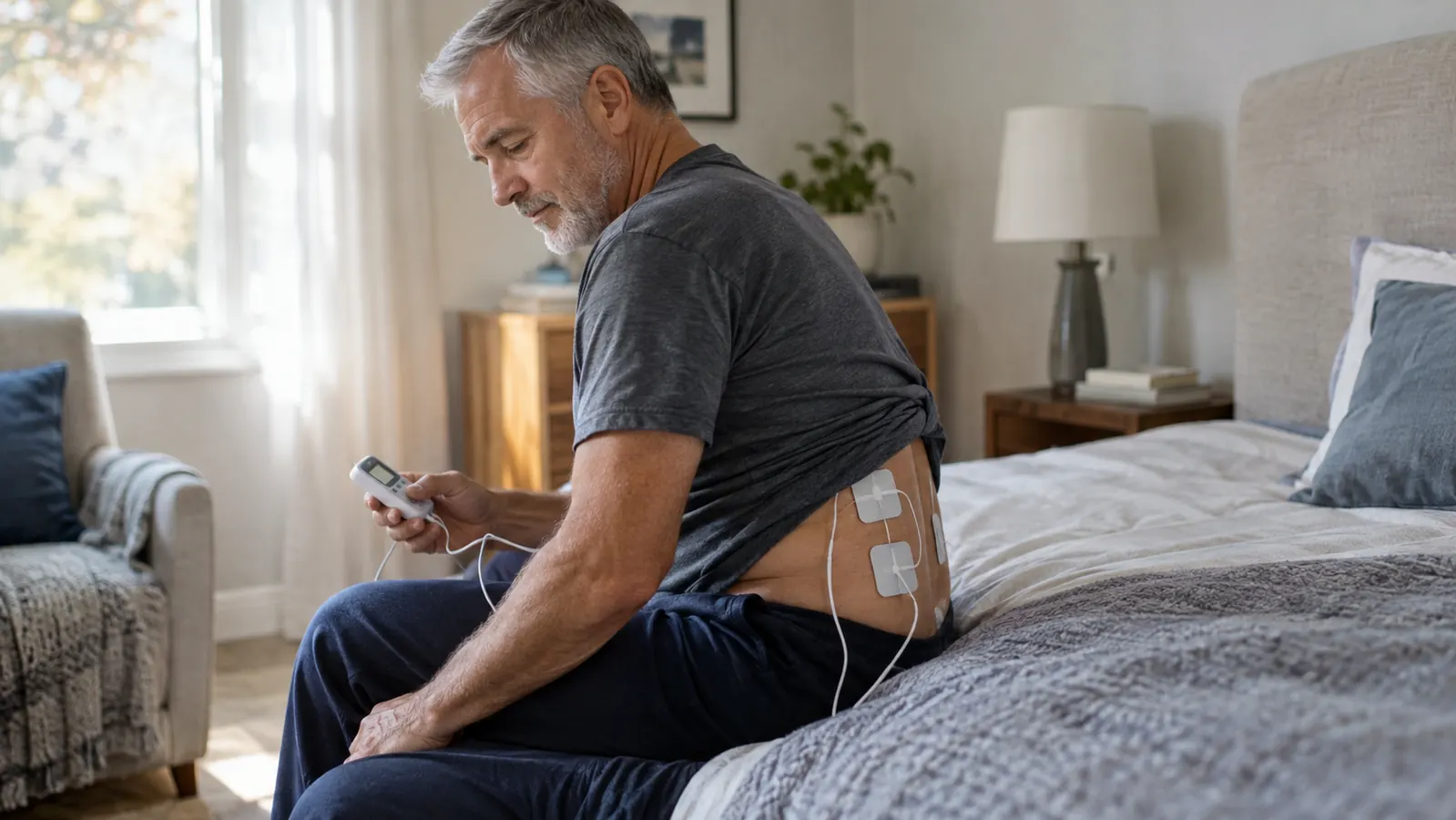
My routine is boring on purpose. On a golf morning, I put two pads on my lower back about an hour before I leave the house, run it for twenty minutes on a moderate setting, and then get dressed. The effect is not dramatic. It is more like the difference between starting a round stiff and starting a round loose. I still warm up on the range. I still stretch. The TENS 7000 Unit just makes the first few holes feel less like a negotiation with my own spine.
After a round, I use it again for twenty minutes while I unload my clubs from the truck. That is the part that surprised me. The morning after a round used to be the worst part of my week. With the TENS 7000 Unit, the next-morning stiffness is still there, but it is quieter. I do not wake up feeling like I need to inventory my own back before I can stand up straight.
I have also used it on long drives to the course. Sitting in an older pickup truck for an hour and a half is exactly the kind of thing that makes my back tighten up before I even swing a club. I have pulled over, put the pads on for fifteen minutes, and finished the drive feeling like I had not been sitting at all. That alone was worth the price to me.
What Nobody Tells You Before You Buy It
The first thing nobody tells you is that the TENS 7000 Unit feels weird the first few times. It is not a massage. It is a tingly, tapping, sometimes sharp sensation that depends entirely on where you put the pads and how high you set the intensity. The first time I used it, I thought I had the settings wrong. I did not. It just takes a session or two to get used to the feeling.
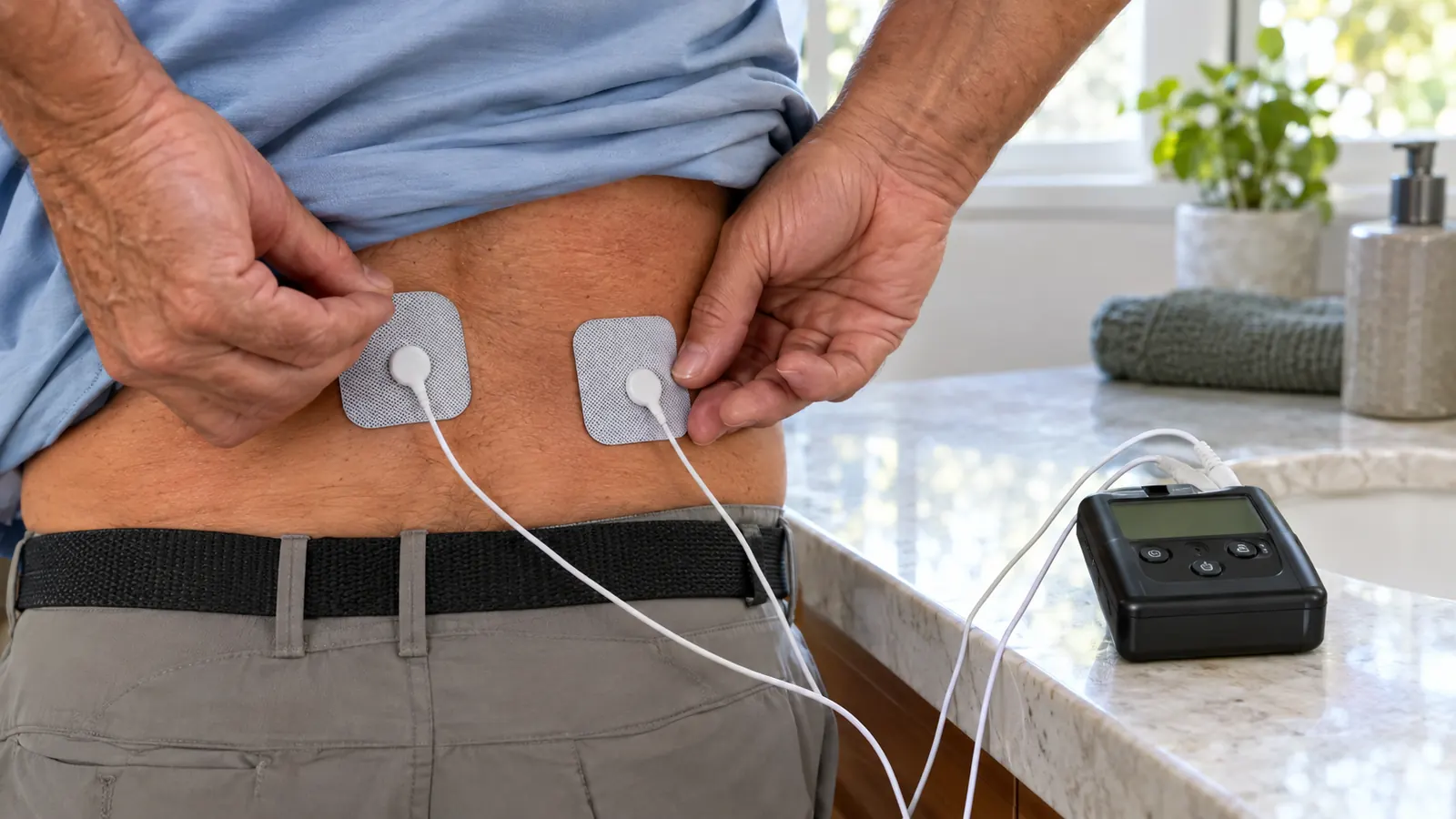
The second thing nobody tells you is that pad placement matters more than the unit itself. The TENS 7000 Unit comes with a diagram, but the diagram is generic. What works for me is placing the pads on the muscle on either side of my lower spine, not directly on the spine and not on the bony parts. It took me about a week of experimenting to find the spots that actually help. If you try it once and give up, you will miss the whole point.
The third thing nobody tells you is that the pads wear out. The TENS 7000 Unit includes a set of pads, and they are fine for a while, but they lose their stickiness after maybe fifteen to twenty uses. When the pads do not stick well, the unit feels weaker and the sensation gets uneven. You will need to buy replacement pads eventually. That is not a flaw in the unit. It is just the cost of using it.
The TENS 7000 Unit does not fix my back. It gives me back the first few holes of a round and the morning after, and for a 61-year-old golfer, that is a lot.
The Settings and the Learning Curve
The TENS 7000 Unit has more settings than I expected, and that is both a strength and a weakness. There are multiple modes, pulse widths, and intensity levels. For a guy who just wants to turn it on and feel better, that is a lot of buttons. I have settled on one mode and one intensity level, and I rarely touch anything else. If you are the kind of person who likes to tinker, you will enjoy the options. If you are not, you will use the same setting every time, and that is fine.
The intensity dial is the part that takes discipline. It is tempting to crank it up until the sensation is strong, but I have learned that a moderate setting works better for me. Too high, and the muscles contract hard enough that I feel sore afterward. Too low, and I do not feel anything. The sweet spot is somewhere in the middle, where it feels like a firm tapping that I can ignore if I am not paying attention.
The unit runs on a 9-volt battery, which is a small thing that matters more than you would think. I keep a spare in the glove box of my truck. The battery lasts a long time, but when it dies, it dies mid-session, and there is no warning light that I have noticed. If you use it as often as I do, keep a spare nearby.
What It Does for Golf Specifically
Golf is a sport of repeated twisting, and my lower back takes the brunt of it. The TENS 7000 Unit does not change the mechanics of my swing. It does not make me more flexible. What it does is change how I feel during the round, and that changes how I move. When my back is not screaming at me on the third tee, I stand taller, I rotate more freely, and I make better contact.
I have also used it between shots on slow days. If the group ahead of us is taking forever, I can feel my back tightening up from standing around. I have gone back to the cart, put the pads on for ten minutes, and come back to the tee feeling reset. That is not something I do every round, but it is nice to know the option is there.
The honest version is that the TENS 7000 Unit is not going to lower your handicap. It is not going to fix a bulging disc. It is not going to replace the stretching, the strengthening, or the advice of a physical therapist. What it does is make the time between those things more comfortable. For me, that is enough.
The Pros and Cons
What I Liked
- Simple to use once you learn the settings
- Battery-powered, so it works anywhere, including on a golf course
- Replacement pads are easy to find
- Helps me start a round loose and recover faster the next morning
- More affordable than regular massage or physical therapy sessions
Where It Falls Short
- The learning curve is real; the first few sessions feel odd
- Pads wear out and need replacing
- It is a temporary aid, not a fix for the underlying issue
- The many settings can feel overwhelming at first
- No warning when the battery is about to die

Where I Put the Pads, and Where I Learned Not To
Pad placement turned out to be the whole game with the TENS 7000. The manual shows a few layouts, and for my lower back the one that works is simple: two pads on the left side of my lower back and two on the right, a couple of inches out from the spine, roughly level with the top of my belt. I never put a pad right on the spine. The muscles on either side are where I feel the ache after a round, so that is where the pads go.
The first week I put the pads too low, almost on the top of my hips, and the tingle felt like it was in the wrong place. Moving them up two inches made a real difference. I also learned that the pads need clean, dry skin to stick. After a sweaty round in July, I wipe my back with a damp towel and dry it before I put them on, or they peel off halfway through the session.
There are places pads should never go, and the manual is clear about it: not on the front or sides of the neck, not across the chest, not on broken or irritated skin, and not on someone with a pacemaker or implanted device unless a doctor has cleared it. I am not a doctor or a therapist, and I asked mine before I started. If your pain is sharp, shoots down your leg, or comes with numbness, that is a doctor visit, not a TENS session.
What a Real Week Looks Like With the TENS 7000
I play two or three times a week, usually walking with a push cart. On playing days I use the TENS 7000 for about twenty minutes in the evening, sitting in my recliner. On the morning after a long round, I sometimes do a second short session before breakfast if I woke up stiffer than usual. On rest days I mostly leave it in its case, unless I spent the afternoon on yard work.
What I noticed after a few months is that the TENS 7000 works best for me as part of a routine, not as a rescue tool. When I pair it with a few minutes of stretching and a good night of sleep, the next round feels easier. When I use it once in a while after a bad day, I get some relief in the moment and not much else. It takes the edge off the ache while it is running and for a while after. It does not change what is happening inside my back, and I do not expect it to.
The batteries last longer than I expected. I get a few weeks out of a set with my routine. The pads are the real ongoing cost, because they lose their stickiness after a few dozen sessions. I keep a spare pack in the drawer so I am never stuck with pads that slide off halfway through.
The intensity dial is the other thing that took time to learn. On my first try I turned it up until it felt strong, thinking stronger meant better, and my back muscles twitched hard enough to be unpleasant. Now I go up in small clicks and stop at the point where the tingle is clear and steady but I could happily sit through it for twenty minutes. Some days that is a lower setting than others, and I have stopped worrying about the number. If I am still noticing the buzz more than the ache after a few minutes, I nudge it up one more click.
Travel is where the TENS 7000 has surprised me most. It fits in a shaving kit with a spare pack of pads, so when Linda and I drove to see her sister last spring and I played two unfamiliar courses in three days, it came with me. A long drive followed by a round is about the worst thing I can do to my lower back, and having the unit in the motel room in the evening made that trip much more pleasant than the last one.
If you are on the fence, here is how I would think about it. If your ache after golf is the dull, tired muscle kind and your doctor is fine with it, the TENS 7000 is a simple, drug-free thing to add to your routine. If you are hoping for a device that fixes your back, this is not it. For me, it is one of the reasons I still look forward to the next tee time instead of dreading the evening after.
Who This Is For
The TENS 7000 Unit is for the golfer who has tried the usual things and still needs something to get through a round. It is for the person who has a stiff lower back, not a sharp or radiating pain. It is for the person who understands that a TENS unit is a tool, not a cure, and who wants to stay active without spending every evening recovering. If that sounds like you, the TENS 7000 Unit is worth a look.
Who Should Skip It
Skip the TENS 7000 Unit if you are looking for a fix for a serious back condition. If your pain is sharp, radiates down your leg, or gets worse over time, do not buy a TENS unit. Talk to a doctor or a physical therapist first. I am not a doctor, and I do not play one in this review. The TENS 7000 Unit helped me manage stiffness, but it did not cure my bulging disc, and I would not want anyone to buy it expecting that.
The honest bottom line
The TENS 7000 Unit is the most practical pain-management tool I own for golf-related back stiffness. It will not fix your back, but it can help you get through a round and sleep better that night.
Amazon Check Today's Price on Amazon →