
I ordered the Caddytek CaddyLite 11.5 V3 in May, the same week my lower back started complaining on the climb up to hole 12 instead of waiting for the next morning. I'm 61, a retired land surveyor in Albuquerque, and I've had lower back stiffness for about ten years. A doctor told me at 52 that I had a bulging disc in my lower back. His advice was simple: don't stop moving, but stop loading the spine. Carrying a 25-pound bag for four miles was loading the spine. I'd walked the course with a stand bag on my back since my forties, and the morning after each round I'd pay for it. My wife Linda started leaving the ibuprofen bottle on the counter before I asked. I tried a lighter bag. I tried double straps. I tried riding for a season. Nothing took the load off the way taking the bag off my back finally did. So in May I bought the CaddyLite, and I've pushed it for forty-something rounds since. This is the honest, months-later review I would have wanted to read before I spent the money.
The Quick Verdict
It takes the weight off your back so you can keep walking the course. Folds flat, rolls well, holds on a slope, and has held up through months of rounds. The trade is a small storage area and a firm grip. For a recreational golfer with lower back trouble, that trade is easy to make.
Amazon Check Today's Price →If your back is done carrying the bag, this is the cart to start with
The Caddytek CaddyLite 11.5 V3 folds down small enough for the bed of my pickup, rolls easily on hard fairways, and its foot brake keeps it planted on our hilliest hole. I've used it two or three times a week since May. See today's price on Amazon and check the full specs.
Amazon Check Today's Price on Amazon →How I've Used It
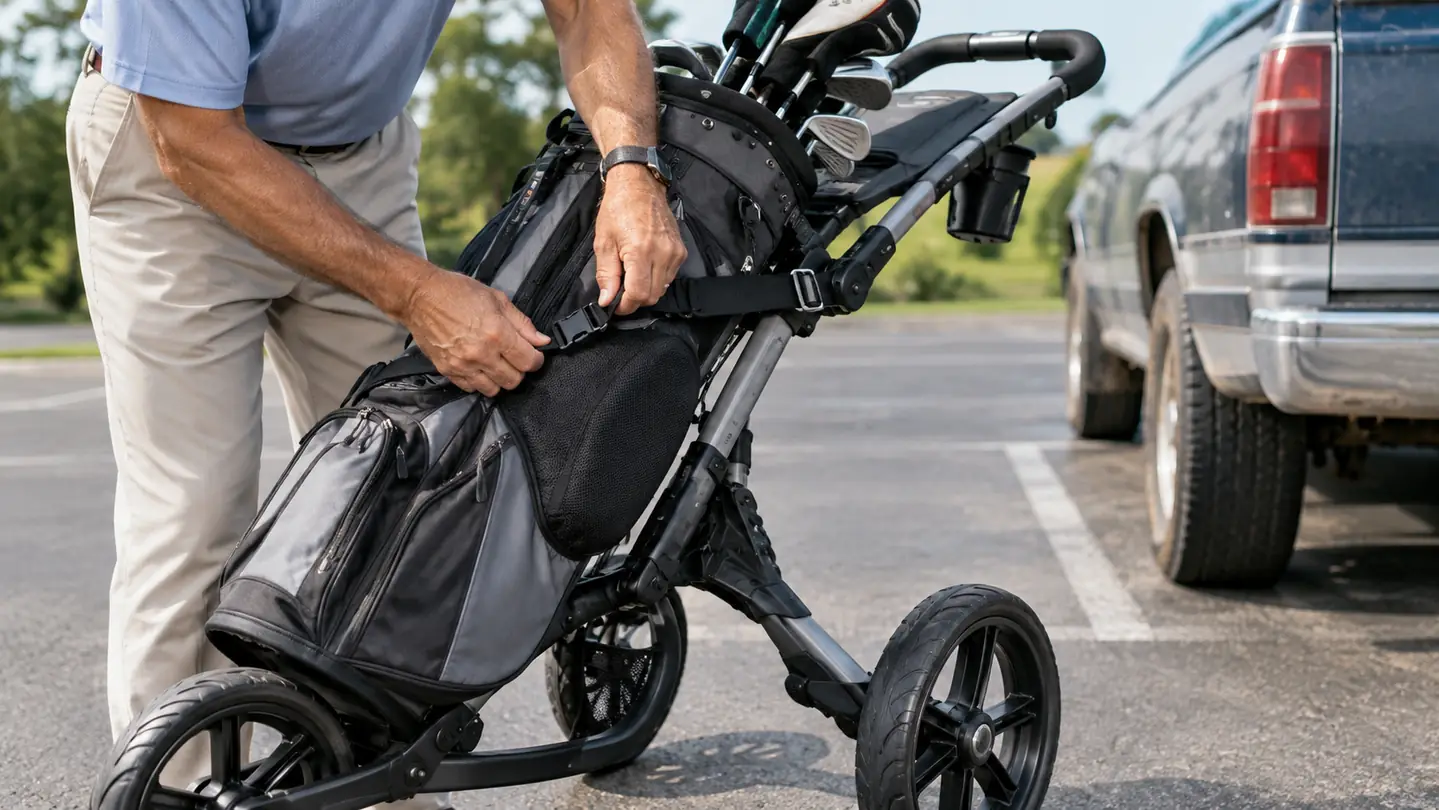
A typical round for me is a 7:10 tee time at the municipal course, walking. I pull the cart out of the pickup bed, unfold it, and have the bag strapped on in about a minute. The quad-fold frame isn't marketing talk; the cart folds flat enough to slide behind the seat of my older truck. Since May I've used it two or three times a week, which works out to forty-something rounds. The course has hard fairways, gravel cart paths, and a back nine that climbs toward a ridge right before the 16th tee.
I keep the mesh net loaded with a water bottle, sunscreen, and my phone. The drink holder rides on the handle and fits the insulated bottle I carry. The umbrella holder is there, and I've used it twice when the monsoon clouds built up in the afternoon. It does the job. The cart is pushed, not pulled, so my shoulders do a little work on uneven ground. I don't mind that. The point was never to remove every bit of effort from golf. The point was to remove the weight from my spine.
The change shows up in the morning. Since I switched to the Caddytek, I don't wake up with the deep ache that followed a carried round. My back still gets stiff; I'm not telling you a cart cures a bulging disc. But the four-hour load is gone, and the difference is real. I also noticed my rounds stopped falling apart at the 15th tee. When you're not carrying weight for four hours, your legs are still there at the end.
Why the Bag Came Off My Back
You hear people blame the golf swing for back trouble, so you start thinking the swing is the culprit. After ten years of stiffness, I've come to think the swing is the small part. The big part is the four miles of walking with a bag hanging off one shoulder. Every step drives the load into the spine. The swing lasts two seconds. The carrying lasts four hours. When my doctor said the words 'bulging disc' at 52, he did not tell me to quit golf. He told me to stop loading the spine and let the inflammation settle. Carrying the bag was the most obvious thing to cut.
I tried lighter bags first. A lighter stand bag helped a little, then not enough. I tried single-strap and double-strap carry, and both just moved the weight around. Then I rode for a season. Sitting in a cart for four hours made my back tighter than walking did. Standing up from the driver's seat after three holes, I could feel the whole lower back seize. That is what sent me looking at push carts. The CaddyLite was not the cheapest or the most expensive option. It was the one whose fold and weight made sense for the way I get around, which means a pickup bed and a garage that already holds a lawnmower and a workbench. A cart that folds small mattered to me as much as a cart that rides light.
The Fold, the Wheels, and the Brake
Three things matter on a push cart: how it folds, how it rolls, and whether it stays put when you set it down. The CaddyLite does all three well enough that I stopped thinking about them, which is the best compliment I can give a piece of equipment. The quad-fold frame collapses in a few seconds and a simple strap holds it folded. I've closed it one-handed with a glove on, and it takes less time than it takes my playing partner to find his tee on the first hole.
The aluminum frame is light. I haven't put it on a scale, but I can lift it into the bed of my pickup with one hand, and I'm not a strong guy. The EVA foam wheels are the part I was most skeptical about until the first time I pushed them across the hard, cracked fairways in June. They roll, they don't skid on hardpan, and they shrug off the goathead thorns that famously puncture bike tires around here. No air to go flat. Ever. That alone has been worth it.
The foot brake is the feature I expected to ignore. Then I played the 12th, where the green sits on a slope that runs toward a wash. I set the brake, and the cart stood dead still while I chipped and putted. It holds on a sidehill too, which matters more than you'd think when your ball ends up below the hole. The adjustable handle has never slipped its lock in the months I've had it, and the height range suits my 5-foot-11 frame. A taller golfer might want more extension, but for me it has been fine.
The Real Test: Forty Rounds on a Hard Course
Any cart feels fine on a lush, flat course in cool weather. Our course is not that. Fairways turn hard by June, the paths are old gravel, and the back nine climbs maybe a hundred feet across three holes. The CaddyLite has handled all of it. The front wheel tracks straight through loose gravel. In the afternoon wind that comes down the canyon, the cart doesn't get blown around the way I feared a light cart would.
What convinced me wasn't the cart itself. It was my legs and my score. Before the switch, I dragged through the 15th and made a lazy swing I blamed on losing my tempo. The truth was fatigue. Pushing the cart, my legs are still under me on the 17th, and the swing at the end of the round looks closer to the one on the first tee. My lower back is involved in the swing, but it isn't starting every swing already tired.
The honest trade is storage. The mesh net takes a water bottle and small items, and the top basket takes a phone and keys. If you carry a cooler, a rangefinder, and three towels, you will run out of room by the turn. That is part of the Caddytek trade-off: it folds flat and rides light, and it asks you to pack lean. For me, a rangefinder in my back pocket and one water bottle is enough. You pick your priorities.
The Swing Comes Back When the Load Goes Away
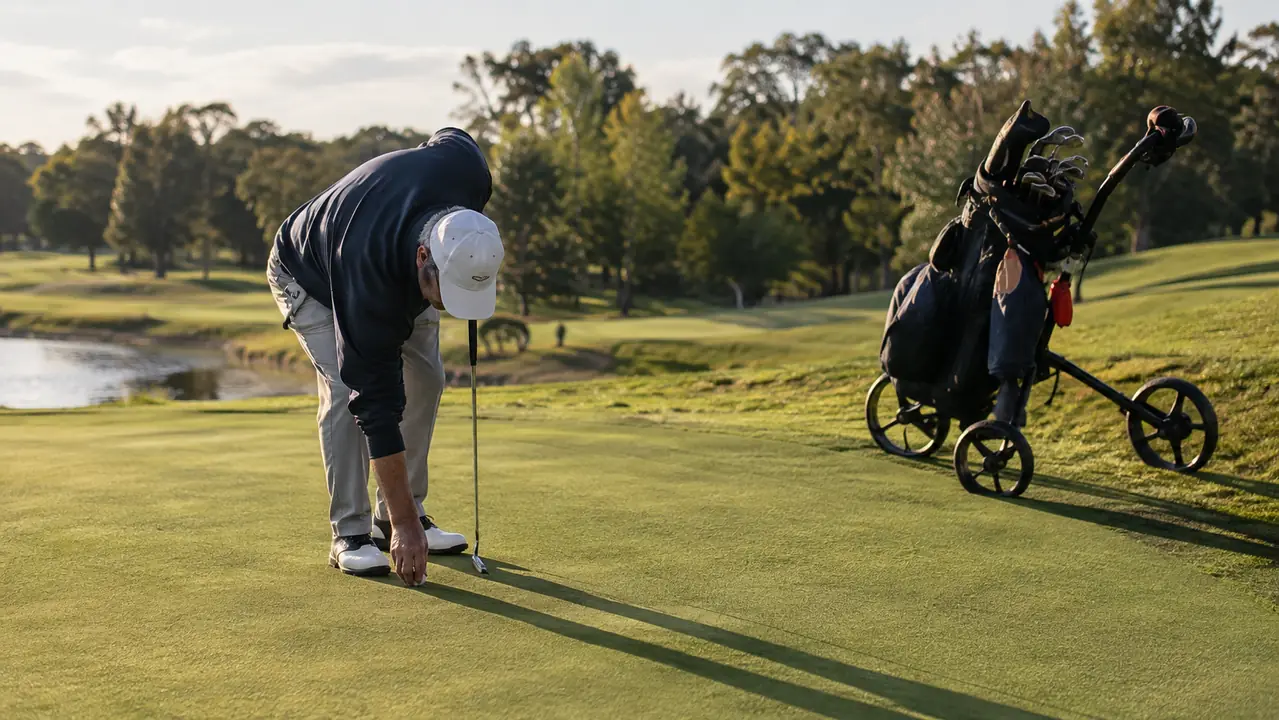
This is the part about the swing, and it's the reason I wanted to write this review in the first place. When my lower back flares, my swing falls apart. I lose my shoulder turn because I'm protecting the back. I stand farther off the ball. I hit weak fades that don't carry. The first round I played pushing the CaddyLite, I expected the back to catch up with me by the 13th. It didn't. The turn, the setup, the finish, they all held up.
I'm not going to claim the cart fixed my back or my swing. A bulging disc is not cured by equipment. But there's a real difference between arriving at a round already tired from carrying and arriving fresh because you pushed the weight instead of wore it. The pro at the muni noticed without me saying anything. He asked if I had changed my setup. I told him I had changed the way I get around the course. He looked at the cart and said, "that will do it."
The practical advice my physical therapist gave me applies to the cart as much as the swing: keep the core engaged, don't bend from the spine to pick up a ball, and don't load the spine for four hours. The cart handled the last one. I still do my stretches. I still wake up stiff some mornings. The cart didn't promise a cure, and it hasn't delivered one. What it did is remove the load so the other habits can do their job.
What Wears Thin After Months of Use
Now the honest list, because nothing I've owned for months is perfect. The grip is the first thing I noticed. It works and it's adjustable, but it isn't the cushioned grip you find on a cart that costs twice as much. On a hot day with sweaty palms, I wish it were softer. Not a dealbreaker. A real difference.
The second is the front wheel on washboard gravel. There's a stretch of our cart path that rattles the front wheel hard enough to shake the whole cart. Nothing dangerous, nothing close to losing control, but it's noisy and it reminds you that this is a smaller front wheel than the ones on bigger carts. That smaller wheel is part of why the fold is so compact. Trade-off again.
The third is that the cart doesn't stand up on its own when it's folded. It leans. In my garage it leans against the wall. In the pickup bed it braces against the side. That's fine once you know it, but I've watched it fall over in a car trunk. And one of the fold straps has started to show wear at the buckle after forty-something rounds. It still holds, but I check it before every round now.
What I Liked
- Quad-fold frame collapses flat enough for a trunk or pickup bed
- EVA foam wheels roll over hardpan and ignore goatheads, never a flat
- Foot brake holds solidly on a sidehill
- Aluminum frame is light enough to lift one-handed
- Folds and unfolds in under a minute, no manual needed
Where It Falls Short
- Storage is smaller than bigger carts
- Front wheel rattles on washboard gravel
- Grip is firmer than premium carts
- Doesn't stand upright when folded
I set the brake on the slope at 12, chipped, and the cart didn't move an inch. That was the moment I stopped wondering if I'd wasted the money.
Who This Is For
If you walk the course, your back tells you when you've overdone it, and you still want to play two or three times a week, the CaddyLite is worth your time. I play to about a 14 handicap, which means I care about my score enough to want my legs and my back at the 16th hole. This cart is for the golfer who wants the bag off their back and doesn't need a cart that looks like it belongs to a tour caddie. It's for the person who loads their own clubs into their own truck and wants something that folds flat and doesn't fight back. If your back trouble looks like mine, talk to your own doctor or physical therapist first. The direction mine pointed me was simple: take the load off. This cart does that.
Who Should Skip It
If you mostly ride in a cart, you don't need a push cart at all. If your doctor has told you to minimize walking altogether, a push cart still asks you to walk, and a riding cart is the honest answer. If you carry a giant tour bag with extra clubs, a cooler, and a speaker, the storage here will frustrate you by the third hole. And if you're a serious walker putting in fifty or more rounds a year on hilly, rugged courses, the wear points I mentioned will show up for you sooner, and a heavier cart with a bigger front wheel and a padded grip may be worth the extra money. For my two or three rounds a week on a municipal layout, this one has been exactly right.
My back didn't get fixed by a cart. But the bag came off, and the rounds got better.
If your lower back is telling you to stop carrying, the Caddytek CaddyLite 11.5 V3 is the cart I would buy again tomorrow. Months of rounds on mine, no regrets. Check today's price on Amazon and decide for yourself.
Amazon Check Today's Price on Amazon →